Accessibility testing, remediation, and documentation for federal agencies and their vendors, built to hold up in procurement and audit.
The Basics
In short
Section 508 of the Rehabilitation Act requires U.S. federal agencies to make their electronic and information technology (ICT) accessible to people with disabilities. Compliance means conforming to the technical standard the law adopts, WCAG 2.0 Level AA, and documenting that conformance, usually in a VPAT, so agencies and their vendors can prove it.
Three things to know
The standard is WCAG 2.0 Level AA
The 2017 “ICT Refresh” adopted WCAG 2.0 Level AA as the measurable requirement for websites, software, and electronic documents.
A VPAT is how you prove it
The Voluntary Product Accessibility Template, completed as an Accessibility Conformance Report (ACR), is the standard evidence buyers expect.
Enforcement is procurement-driven
Non-conformance stalls or loses contracts and can trigger accessibility complaints, rather than direct financial fines.
The Standard
The law does not describe accessibility in its own words. It adopts an existing technical standard and makes conformance to it the measurable requirement, so “compliant” means something specific and testable.
Who sets it
The U.S. Access Board
The federal agency that writes and maintains the Section 508 standards for information and communication technology.
What changed
The 2017 ICT Refresh
Modernized the rule and tied it directly to a recognized web accessibility standard instead of separate federal criteria.
The measurable bar
WCAG 2.0 Level AA
The technical baseline for websites, software, and electronic documents. Conformance to it is what “508 compliant” means.
What WCAG 2.0 AA asks for
Every success criterion rolls up to four principles. Content must be:
People can perceive the content, with text alternatives, captions, and sufficient contrast.
Everything works by keyboard and assistive technology, not a mouse alone.
Content reads clearly and interfaces behave predictably.
Code is clean enough to work across current and future assistive technologies.
Who It Applies To
Section 508 binds federal agencies directly, and it extends to their contractors and vendors, because an agency cannot buy technology that does not conform. If you sell to the government, Section 508 is your requirement too.
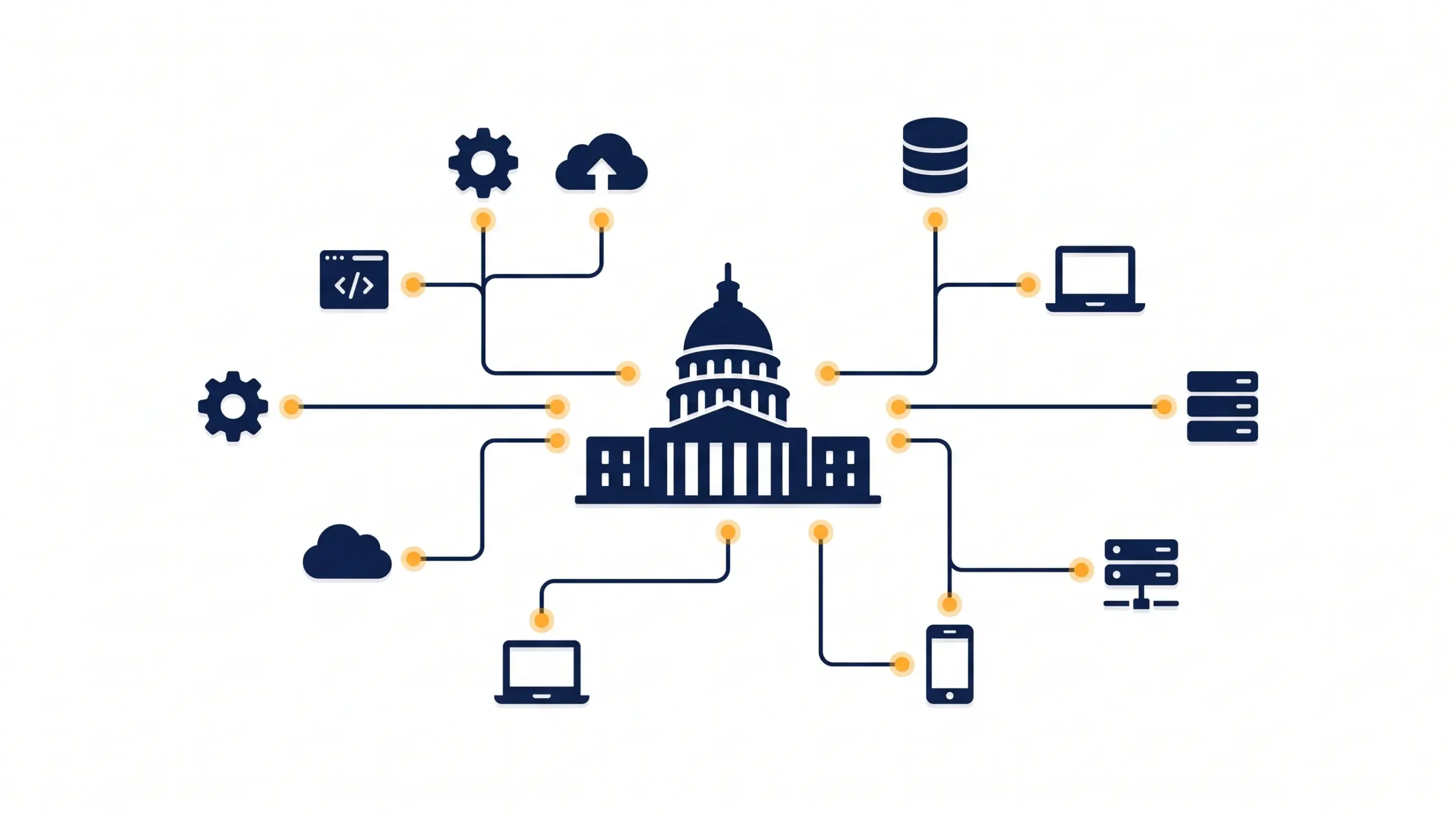
BOUND THROUGH PROCUREMENT
If you sell technology to the government, Section 508 is your requirement. An agency has to document conformance before it can buy, so a VPAT is often a condition of winning or keeping the contract.
Bound directly by law
Every federal department and agency must make the technology it develops, buys, maintains, or uses accessible to employees and the public with disabilities.
Not sure if it applies to you? If your product is bid into a federal contract, sold to an agency, or used on federally funded work, plan for Section 508. State and local governments increasingly reference the same WCAG standard, so the requirement rarely stays contained to the federal level.
Federal agencies, their contractors, and enterprise brands rely on TestPros for accessibility testing they can document and defend, the same standard your federal buyer will hold you to.









Proving It
Meeting the standard is only half the job. A federal buyer needs documented evidence they can put in a file and defend, and there is a standard format for it.
The template
The Voluntary Product Accessibility Template is the standardized form agencies expect. The 508 edition maps directly to the Revised Section 508 requirements. See how a VPAT works.
The evidence
Each criterion is tested and rated, Supports, Partially Supports, Does Not Support, or Not Applicable, with remarks explaining the result. The completed VPAT is the ACR, the artifact a buyer relies on.
Our Methodology
Automated scans are a fast first pass, but they miss the barriers that decide most reviews. We test the way the government does, by hand, with the same assistive technology your users rely on.

We define what is in scope, then run automated tooling to catch the obvious issues quickly.
Certified analysts work through the product with screen readers, keyboard only, and magnification, using the DHS Trusted Tester process.
We fix the code and documents, then record each result in a VPAT, with severity, evidence, and remarks.
We confirm the fixes hold and update the report to reflect the corrected, defensible state.
TestPros sells no scanner, overlay, or accessibility product. We are not scoring our own tool, so a “Supports” on your report means a certified person confirmed it, not that a product we profit from reported it. That is what makes the findings defensible when a procurement officer, auditor, or regulator checks them.
Section 508 Services
Manual, DHS Trusted Tester evaluation of your product against WCAG 2.0 AA, with severity-rated findings and evidence.
Explore auditsWe fix the code, documents, and PDFs, not just flag them, then retest and update the report to a defensible state.
Explore remediationVPAT and ACR preparation, procurement support, and guidance to build accessibility into your process going forward.
Explore consultingFAQ
Get Started
Tell us what you need tested or remediated and your timeline.
Request an Assessment