
Table of Contents
On April 20, 2026, the Department of Justice extended the ADA Title II digital accessibility compliance deadlines by one year. Large public entities now have until April 26, 2027, and smaller entities and special districts until April 26, 2028. Most coverage of this development focused on the new dates. The more consequential part of the rule is what the DOJ said about why the extension was necessary.
What the DOJ Found
In explaining its rationale for the extension, the DOJ made a direct statement about the state of accessibility technology that every covered entity should read carefully. From the Interim Final Rule:
“Advanced technology, such as generative AI, does not yet reliably automate the remediation of inaccessible content at scale, and staff resources and availability continue to pose significant challenges.”
This is not an opinion from an accessibility vendor or an advocacy organization. That finding came from the federal government itself, published in the Federal Register as a primary reason the original compliance timeline was unworkable.
The DOJ went further, drawing a direct operational implication from that finding:
“The less public entities can rely on technology to make their web content and mobile apps accessible, the more they will need to rely on manual work instead.”
And in its summary conclusion, the Department acknowledged that it had “overestimated the capabilities (whether staffing or technology) of covered entities to comply with the rule in the time frames provided.”
Read together, these statements carry a clear message: the compliance ecosystem that many covered entities were counting on, including automated tools, AI-assisted scanning, and AI-driven remediation platforms, was not sufficient to get the job done on time, and the DOJ now has the evidence to say so.
What This Means for Your Compliance Program
If your current accessibility compliance plan centers on an automated remediation tool, an AI-powered overlay, or a platform that promises to fix accessibility issues without significant human involvement, the DOJ’s own findings are a signal to reassess.
Automated scanning tools that identify accessibility problems serve a legitimate function. The DOJ’s statement is specifically about AI-powered remediation, meaning the automated fixing of inaccessible content at scale. That is a distinct and harder problem, and it is the one the DOJ says technology has not solved.
The practical implication for compliance officers and IT directors is straightforward. A scanner can tell you where problems exist. It cannot reliably fix them, validate that fixes meet the standard under real assistive technology conditions, or produce the kind of documented remediation record that demonstrates a defensible compliance program. That work requires human expertise.
What the Extra Year Should Actually Be Used For
The DOJ’s extension was not a signal that compliance is optional or that the urgency has passed. The rule is explicit that existing obligations under Title II of the ADA remain in effect regardless of the new compliance dates. Private litigants retain the right to sue under Title II independent of DOJ enforcement timelines, and the rule acknowledges that litigation exposure was a central concern driving the extension in the first place.
What the extra year provides is something more valuable than a reprieve: it is time to do the work correctly rather than rush toward procedural checkboxes. The DOJ’s own rulemaking record includes concern that tight deadlines were pushing covered entities toward “rapid, procedural box-checking” rather than “thoughtful and sustainable implementation efforts.”
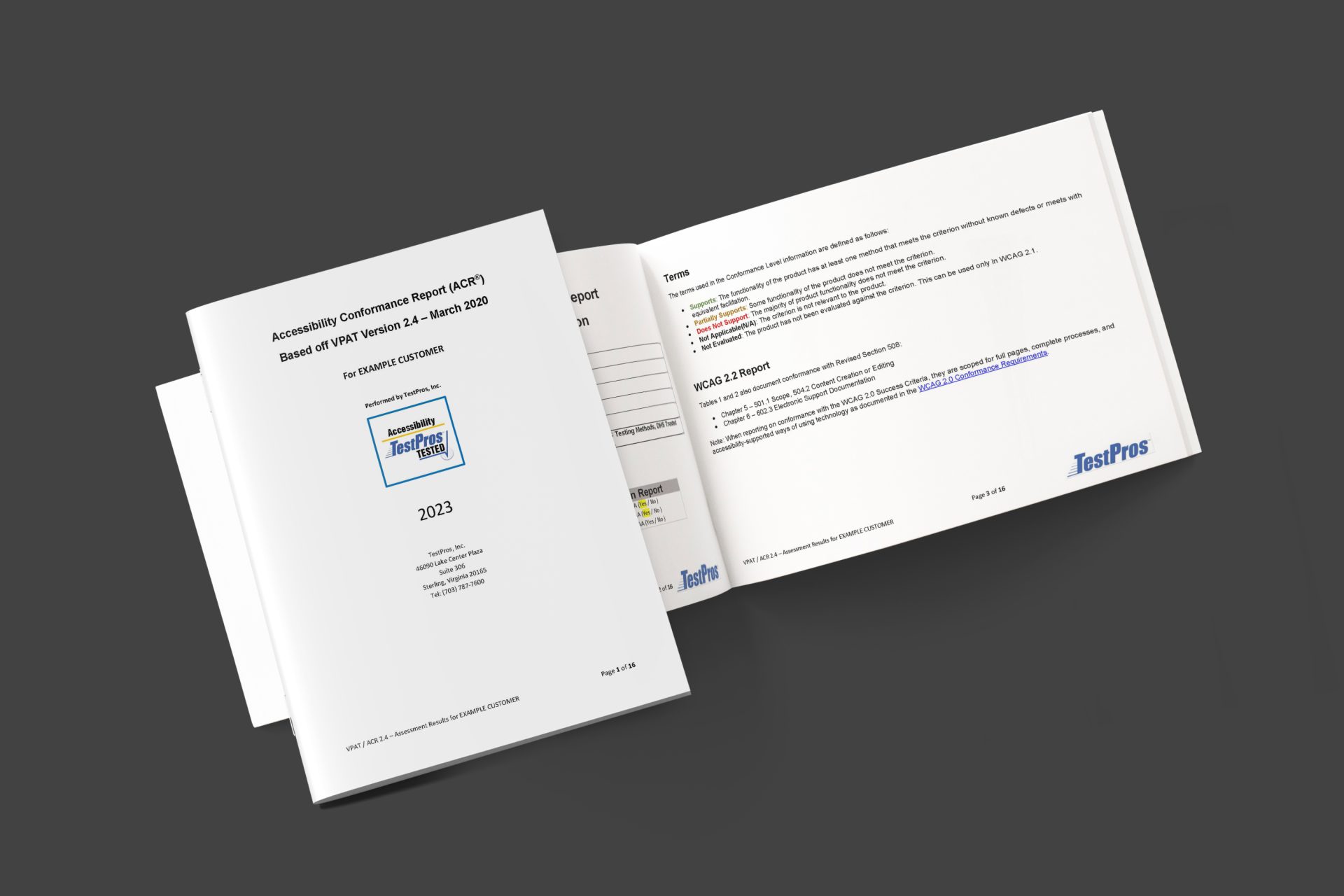
An entity that uses the next twelve months to conduct a structured, expert-led accessibility audit will be in a fundamentally different compliance position. That audit should test against WCAG 2.1 Level AA using real assistive technologies, produce a documented finding record, and drive a prioritized remediation roadmap.
Running a scanner, generating a report, and filing it away achieves none of that.
TestPros offers a free ADA Title II Digital Accessibility Compliance Tracker to help state and local governments assess where they stand against the rule’s requirements before gaps become liabilities.
The Path Forward
The DOJ’s Interim Final Rule produced a clear and citable finding: automated technology is not a substitute for human-led accessibility work at scale. That finding applies directly to the compliance decisions covered entities are making right now about how to spend the next twelve months.
TestPros conducts independent digital accessibility assessments for state and local government entities, with testing performed by human experts against WCAG 2.1 Level AA, the standard required under the 2024 final rule. If your organization is ready to move from automated scanning to validated, documented compliance, we are ready to help.
Contact TestPros to schedule an accessibility assessment.
SHARING IS CARING
AUTHOR

Topics
Tags